Breaking News


Enter your email address below and subscribe to our newsletter
OpenAI.my.id — Your trusted source for AI tools, agents, and insights.

Character AI is redefining how people interact with technology. From immersive storytelling and gaming to personalized tutoring and intelligent customer support, AI-powered characters are transforming entertainment, education, and business. This comprehensive guide explores real-world use cases, benefits, challenges, and future trends shaping the Character AI ecosystem in 2026.
Character AI has rapidly evolved from simple scripted chatbots into highly interactive, personality-driven systems capable of holding dynamic conversations, simulating human emotions, and adapting to user behavior. Unlike traditional chatbots, which are often task-oriented and limited in conversational depth, Character AI focuses on creating engaging, lifelike personas that can entertain, educate, and assist.
As artificial intelligence continues to mature, the applications of Character AI are expanding across industries. Whether it’s a virtual companion in a game, a personalized tutor for students, or a brand representative handling customer inquiries, Character AI is reshaping digital interaction.
This article explores the key use cases of Character AI across three major domains: entertainment, education, and business.
One of the most popular uses of Character AI is in interactive storytelling. Users can engage with fictional characters, historical figures, or entirely custom personas in dynamic narratives that evolve based on user input.
Unlike traditional storytelling formats, Character AI enables:
For example, users can create a fantasy world where AI characters react to their decisions, effectively turning storytelling into a collaborative experience.
In the gaming industry, Character AI is revolutionizing non-player characters (NPCs). Traditionally, NPCs follow scripted dialogues and limited interaction paths. With Character AI, NPCs can:
This creates a more immersive gaming experience, where players feel like they are interacting with real individuals rather than programmed entities.
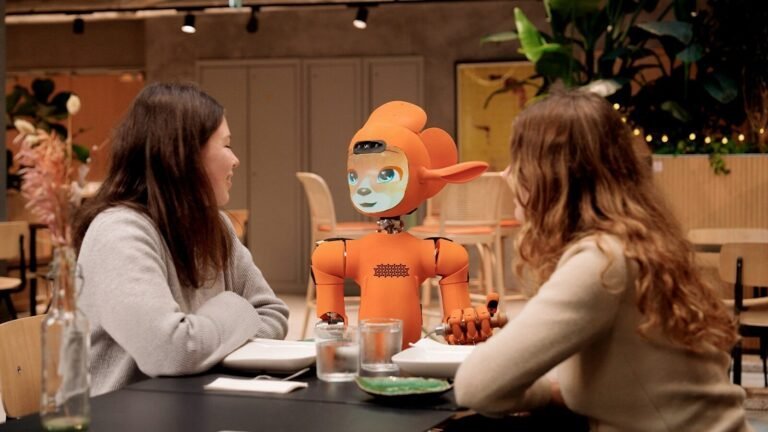
Character AI is also widely used to create virtual companions. These AI-driven personalities can serve as friends, mentors, or conversational partners.
Key benefits include:
For many users, especially those seeking companionship or entertainment, these AI characters provide a unique form of social interaction.
Content creators are increasingly using Character AI to generate scripts, dialogues, and even entire narratives. AI characters can assist in:
This allows creators to produce content faster while maintaining creativity and engagement.
Character AI is transforming education by acting as personalized tutors. These AI-driven characters can adapt to individual learning styles and provide tailored guidance.
Features include:
Students can ask questions, practice problems, and receive explanations in a conversational manner, making learning more engaging.
Language learning is another major application of Character AI. AI characters can simulate real-life conversations, helping learners practice speaking and comprehension.
Benefits include:
Unlike traditional methods, learners can interact with AI characters anytime without fear of judgment.
Character AI enables realistic simulations for training and education. For example:
These simulations provide hands-on experience in a safe environment.
Character AI enhances engagement through gamified learning experiences. By incorporating AI characters into educational platforms, learning becomes more interactive and enjoyable.
Examples include:
This approach improves retention and motivation among learners.
One of the most impactful uses of Character AI in business is customer support. AI characters can act as virtual agents that handle customer inquiries efficiently.
Advantages include:
Unlike traditional chatbots, Character AI provides a more human-like interaction, improving customer satisfaction.
Character AI is increasingly used in sales and marketing to engage customers and drive conversions.
Applications include:
These AI characters can guide users through the buying process, making interactions more engaging and effective.
Businesses use Character AI for employee training and onboarding. AI characters can simulate real-world scenarios and provide interactive training sessions.
Benefits include:
Employees can learn at their own pace while interacting with AI-driven trainers.
Character AI can also improve internal workflows by assisting employees with tasks such as:
This enhances productivity and allows employees to focus on more strategic activities.
Character AI offers several advantages across entertainment, education, and business:
These benefits make Character AI a valuable tool for organizations and individuals alike.
Despite its advantages, Character AI also faces several challenges:
Issues such as data privacy, bias, and misuse of AI-generated content remain significant concerns.
AI-generated responses may sometimes be inaccurate or misleading, especially in complex scenarios.
Users may develop emotional attachments to AI characters, raising psychological and ethical questions.
While advanced, Character AI systems are still limited by training data and computational resources.
The future of Character AI looks promising, with several emerging trends:
AI characters will become even more personalized, adapting to user preferences, behavior, and emotions.
Future systems will integrate text, voice, and visual interactions for more immersive experiences.
Character AI will play a key role in augmented and virtual reality environments, enabling fully immersive interactions.
AI characters will evolve into autonomous agents capable of performing complex tasks independently.
Character AI is transforming how people interact with technology across entertainment, education, and business. By combining conversational intelligence with personality-driven design, AI characters create engaging, personalized experiences that go beyond traditional chatbots.
As technology continues to evolve, Character AI will play an increasingly important role in shaping the future of digital interaction. Organizations and individuals that embrace this technology will be better positioned to leverage its benefits and stay ahead in a rapidly changing landscape.
Character AI refers to AI systems designed to simulate human-like personalities and conversations, enabling interactive and engaging user experiences.
Character AI focuses on personality, emotional engagement, and dynamic conversations, while traditional chatbots are typically task-oriented and rule-based.
The main use cases include entertainment, education, and business applications such as gaming, tutoring, and customer support.