Breaking News
Enter your email address below and subscribe to our newsletter
OpenAI.my.id — Your trusted source for AI tools, agents, and insights.
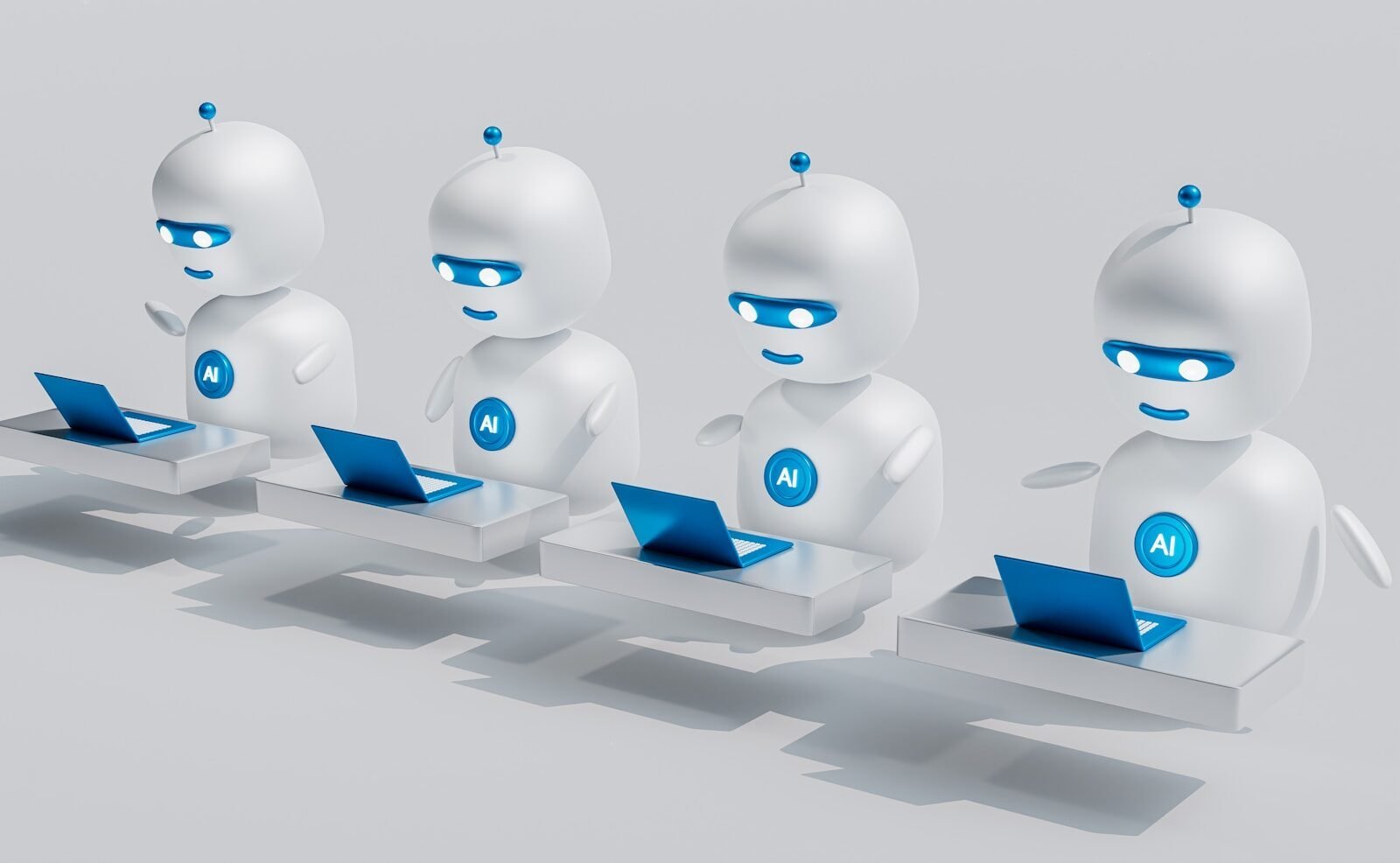
Character AI and traditional chatbots may seem similar, but they serve very different purposes. While Character AI focuses on personality-driven conversations and immersive experiences, traditional chatbots are built for efficiency, accuracy, and task automation. This guide explores their key differences, benefits, and real-world use cases.
Artificial intelligence has evolved from stiff, robotic “Press 1 for billing” systems into eerily conversational digital entities that can roleplay as your favorite fictional character or help you write a business proposal. Somewhere along that spectrum sit two distinct categories: Character AI and traditional chatbots.
At first glance, they look similar. You type. They respond. Everyone pretends it’s normal. But under the hood, these systems are built for very different purposes, audiences, and experiences.
This article breaks down the core differences, strengths, weaknesses, and real-world use cases of Character AI versus traditional chatbots, so you can stop lumping them together like they’re interchangeable. They are not.
Character AI refers to AI systems designed to simulate personalities rather than just provide answers. Platforms like Character.AI official site allow users to create or interact with custom digital characters that behave according to defined traits, tone, and backstory.
At its core, Character AI is powered by large language models that generate responses based on context, personality design, and conversational memory.
Instead of asking, “What’s the weather?”
You’re asking, “What would Sherlock Holmes say about the weather?”
And somehow, that’s what people wanted all along.
Character AI allows users to create characters with defined personalities, histories, and communication styles, shaping how the AI responds in conversation (The Knowledge Academy).
It’s less about accuracy and more about experience.
Traditional chatbots are the original corporate attempt to automate conversations without hiring more humans. They come in two major types:
Traditional chatbots are designed primarily to:
They prioritize accuracy, consistency, and control over personality.
Let’s strip it down:
| Feature | Character AI | Traditional Chatbots |
|---|---|---|
| Purpose | Entertainment, immersion | Task completion |
| Personality | Central feature | Minimal or none |
| Flexibility | Very high | Limited (especially rule-based) |
| Accuracy | Variable | High (structured systems) |
| Use Case | Roleplay, storytelling | Customer support, automation |
Character AI specializes in interactive storytelling and personality simulation, while traditional chatbots focus on information delivery and task execution (DxTalks, Digital Leaders Platform).
One is a digital actor. The other is a glorified FAQ machine.
Character AI relies on advanced language models trained on massive datasets. What makes it different is the layer of personality conditioning.
Each character has:
The AI analyzes:
Then it generates a response that fits the character, not just the question.
This is why it can feel… unsettlingly human.
Character AI systems emphasize personality modeling, including memory, mannerisms, and evolving behavior over time (WeCloudData).
Traditional chatbots are far less dramatic.
Even advanced chatbots aim to:
They’re efficient. Predictable. Slightly boring.
Character AI:
Traditional Chatbots:
This is the biggest philosophical split:
Character AI allows deep customization:
Users can create and share characters publicly, leading to massive libraries of unique personas (Wikipedia).
Traditional chatbots:
One lets you create a sarcastic vampire philosopher.
The other helps you reset your password.
Character AI:
Traditional chatbots:
AI chat systems like ChatGPT show more human-like conversational ability compared to traditional chatbots, which remain structured and task-focused (Chatbase).
Character AI:
Traditional Chatbots:
Character AI responses may sometimes be speculative or incorrect due to user-generated character behavior and conversational freedom (The Knowledge Academy).
Translation: it’s fun, but don’t ask it to do your taxes.
Character AI:
Traditional Chatbots:
One is a storytelling engine. The other is a productivity tool.
Character AI offers highly engaging conversations that feel personal and dynamic. It simulates real personalities, making interactions more compelling.
Users can:
This makes it valuable for:
Character AI allows deep customization, enabling users to tailor conversations to their preferences (The Knowledge Academy).
It can simulate empathy, humor, sarcasm, or drama.
Whether that’s comforting or mildly concerning depends on how much time you spend with it.
Character AI supports:
It’s weirdly versatile.
Traditional chatbots provide consistent, accurate responses. No personality drift. No existential crises.
They:
Used widely in:
Companies love them because:
Businesses can control:
Which is important when legal teams are involved.
Let’s not pretend it’s perfect.
It may generate incorrect or fictional information.
Some users get… too attached.
Yes, humans bonding with code again. Not new, just faster now.
Not ideal for:
User-generated characters can lead to unpredictable responses.
Interactions feel robotic.
Struggle with complex or unexpected queries.
Let’s be honest:
Most chatbot conversations feel like arguing with a vending machine.
Use Character AI when:
Use traditional chatbots when:
The line between these two systems is already blurring.
Modern AI tools are combining:
Future chatbots will likely:
Basically, the machine will help you book a flight while pretending to be a medieval knight if that’s what you’re into.
Character AI and traditional chatbots represent two different philosophies of AI interaction:
Neither is “better.” They serve different purposes.
Character AI focuses on personality-driven conversations and immersive interactions, while traditional chatbots are designed for task completion, information delivery, and business automation.
Character AI is more advanced in conversational depth and personality simulation, but traditional chatbots are more reliable and accurate for structured tasks.
Character AI can be used for engagement and marketing experiences, but it is not ideal for workflows that require strict accuracy and control.