Breaking News


Popular News





Enter your email address below and subscribe to our newsletter
AI News
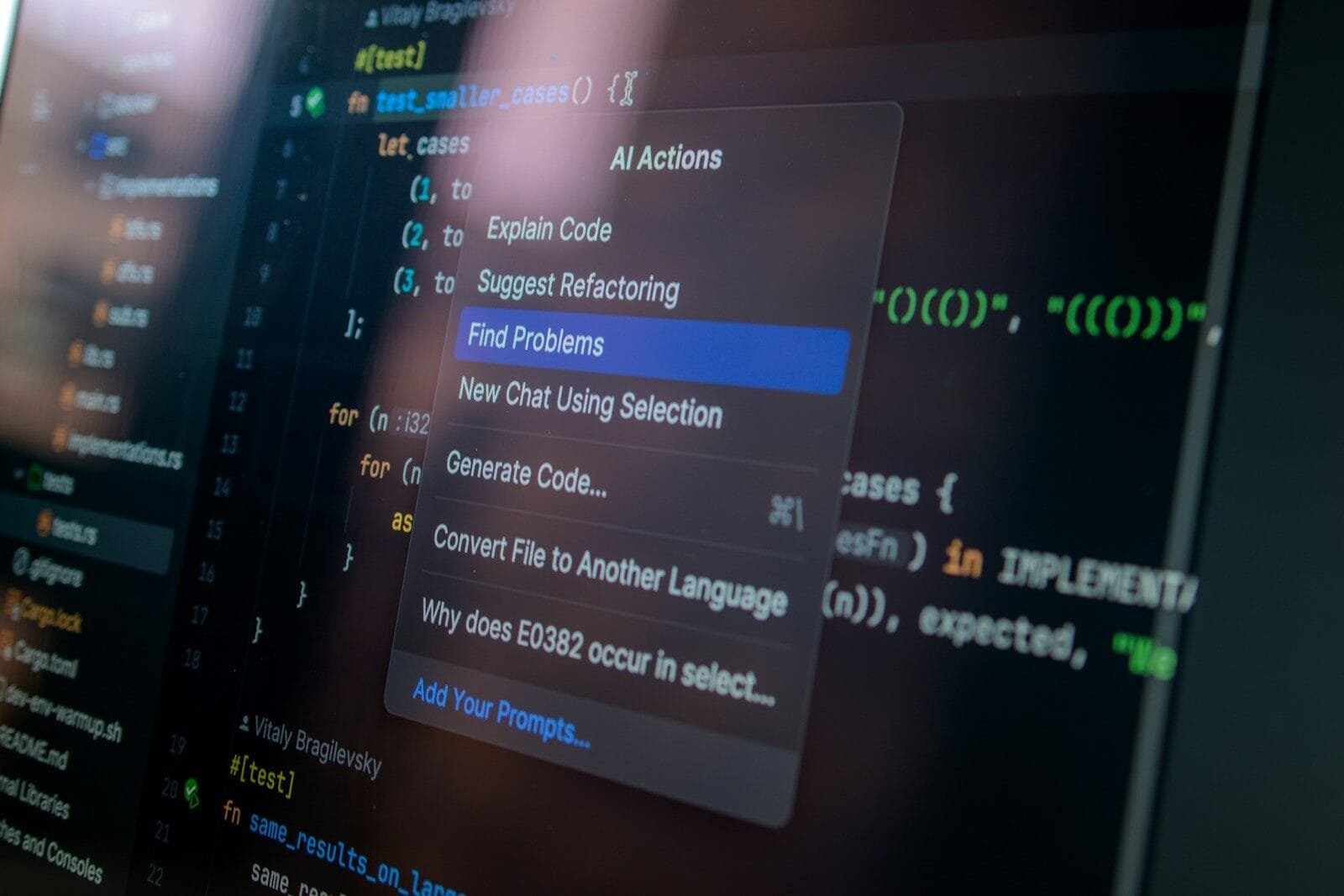
Artificial intelligence has radically transformed how software is developed. By 2026, generative AI isn’t just suggesting lines of code — it is generating features, running tests, orchestrating multi-agent workflows, and fundamentally shaping developer productivity.
In this fast-evolving landscape, one question frequently arises:
Is OpenAI Codex still relevant in 2026, or has it been eclipsed by newer AI coding assistants?
To answer that, we need to look at how Codex has evolved, how the broader AI coding ecosystem is changing, and where Codex fits in a world of autonomous coding agents.
AI assisted coding isn’t new — tools like GitHub Copilot have been completing code in editors for years — but 2026 is the era of coding agents: AI systems that do more than autocomplete, such as generating pull requests, running tests, refactoring code, and integrating with full development workflows. (Medium)
These tools fall into several categories:
In this environment, several standout AI tools include Copilot, Claude Code, Cursor, and Codex itself.
Unlike the original Codex model from earlier years, the 2026 iteration of Codex has been reinvented into a full coding agent powered by advanced models like GPT-5.3-Codex. (OpenAI)
Copilot remains a top choice for contextual code suggestions inside the editor. While Copilot is great for real-time assistance during editing, it is less focused on autonomous multi-agent tasks. (Amplifi Labs)
Anthropic’s Claude Code has gained prominence as a feature-rich agent, demonstrating strong performance in tasks like pull request generation, documentation creation, and even independent code editing workflows. Some industry observers see Claude-based agents surpassing traditional models in daily coding tasks. (Medium)
Tools like Cursor often perform well for IDE workflows and incremental fixes, with some prioritizing specific development styles. (WaveSpeedAI)
Despite competition, Codex remains relevant in several key areas:
✔ Deep reasoning and long-context understanding
GPT-5.3-Codex improves context tracking and complex coding tasks that go beyond simple completion. (OpenAI)
✔ Multi-agent orchestration
With the Codex App and backend infrastructure like the App Server, Codex helps coordinate multiple agents — a capability not matched by all competitors. (InfoQ)
✔ Custom integration and embed-ability
Developers can still embed Codex into custom development flows or proprietary tooling via APIs. (Overchat AI)
✔ Cross-platform use
Codex bridges both IDE and external workflows (CLIs, servers, apps) and isn’t restricted to a single interface. (InfoQ)
That said, Codex faces new challenges in 2026:
Tools designed to act autonomously (like Claude Code) can often complete high-level tasks without as much human oversight. (Medium)
As AI tools become integrated with development pipelines, ensuring security and trust boundaries is critical — not just for Codex but for all agents. (TechRadar)
Many developers are now choosing agentic workflows — where AI executes tasks with minimal supervision — over simple suggestion-based scripting. Codex’s relevance depends on how deeply it can adopt these patterns. (Medium)
Is Codex still relevant in 2026? Absolutely — but its role has shifted.
Rather than being just a smart autocomplete tool, Codex has evolved into:
It’s no longer just about generating individual lines of code — it’s about coordinating complex workflows and acting as a powerful partner in the software lifecycle.
At the same time, newer and specialized tools like Claude Code, Copilot, and Cursor offer complementary strengths — particularly in niche workflows or IDE contexts — making Codex one part of a broader ecosystem of AI coding tools. (Amplifi Labs)
In 2026, AI coding tools are no longer simple autocomplete helpers — they’re full-fledged agents capable of independent reasoning, collaboration, and complex task execution.
OpenAI Codex remains relevant because it has evolved along with this trend, expanding beyond code generation into agent orchestration, deep reasoning, and toolchain integration. While competition is fierce and workflows increasingly diverse, Codex’s versatility and continued integration into mainstream tools affirm its place in modern development toolchains.
Rather than asking “Is Codex still relevant?”, the better question for developers today is:
How can I combine Codex with other AI agents to build faster, safer, and more scalable software?