Breaking News
Popular News



Enter your email address below and subscribe to our newsletter
AI News
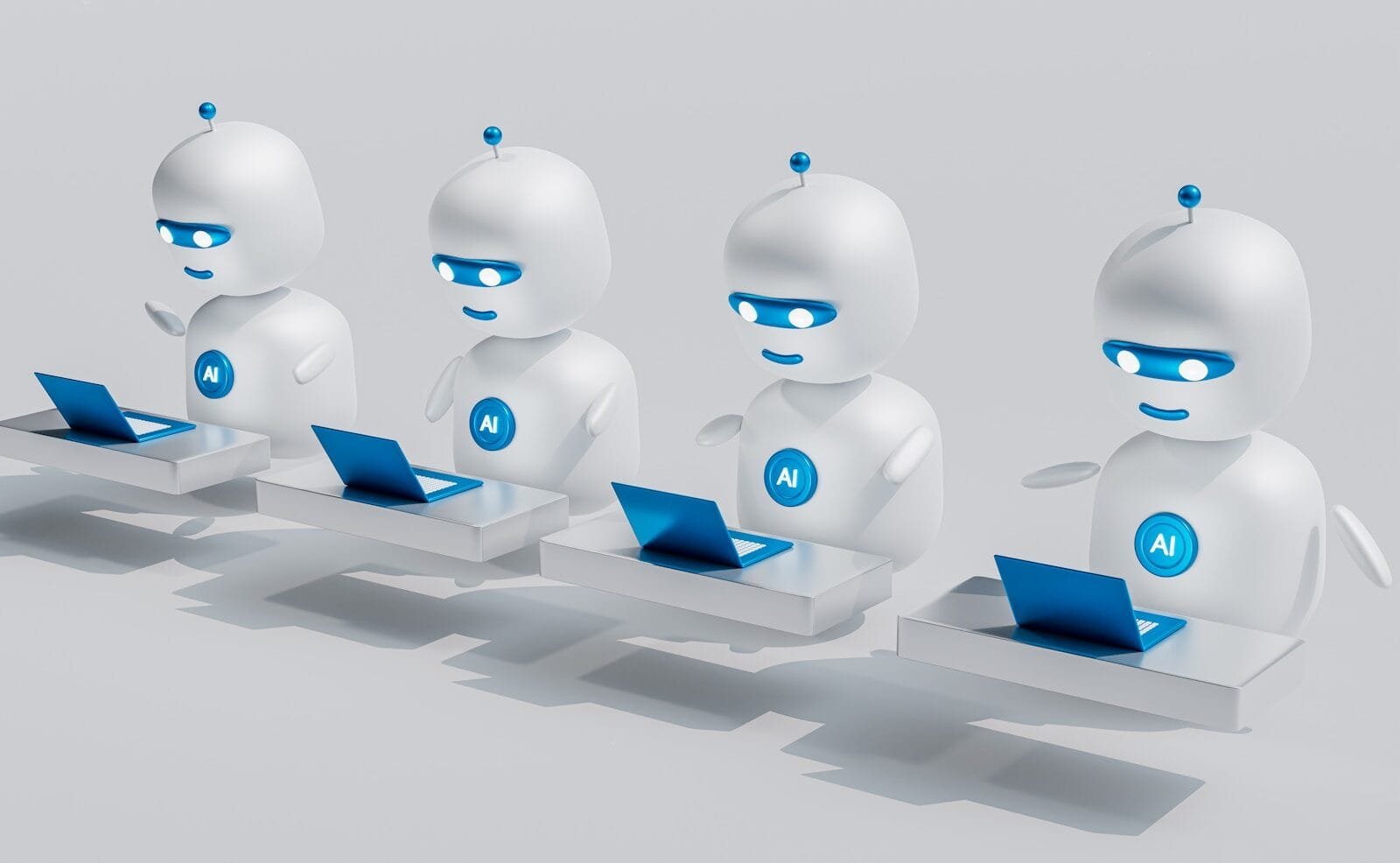
Artificial intelligence has evolved rapidly over the past few years. What began as simple rule-based chatbots has transformed into intelligent systems capable of reasoning, planning, and executing complex workflows.
In 2026, many businesses and developers are asking:
What’s the real difference between AI agents and chatbots?
While the terms are sometimes used interchangeably, they represent fundamentally different levels of capability, autonomy, and system design.
This article breaks down the core differences, real-world use cases, and what organizations should consider when choosing between the two.
A chatbot is an AI-powered system designed primarily for conversation.
Modern chatbots—especially those powered by large language models from organizations like OpenAI—can:
However, most chatbots are reactive systems. They respond to user prompts but typically do not initiate actions or execute multi-step workflows independently.
They excel at communication—but not autonomous execution.


An AI agent goes beyond conversation.
An AI agent is an intelligent system capable of:
Instead of simply replying to a prompt, AI agents can:
They are goal-oriented systems, not just conversational interfaces.
| Feature | Chatbots | AI Agents |
|---|---|---|
| Primary Role | Conversational assistant | Task executor |
| Autonomy | Low | High |
| Multi-step reasoning | Limited | Advanced |
| Tool usage | Rare | Built-in |
| Memory | Short session-based | Persistent / contextual |
| Workflow execution | User-guided | Self-directed |
| Example Use Case | Customer support | Automating business processes |
Let’s compare both systems in a real-world scenario.
User: “Book me a business trip to Tokyo.”
Chatbot:
User must manually complete the process.
User: “Book me a business trip to Tokyo.”
AI Agent:
Minimal manual involvement required.


Several trends are accelerating agent adoption:
Modern apps expose APIs that AI agents can call.
Advanced APIs from providers like OpenAI enable structured tool usage.
Businesses want AI systems that reduce operational workload—not just answer questions.
Improved memory allows agents to manage complex projects across sessions.
Despite the rise of AI agents, chatbots remain highly effective for:
Chatbots are simpler, cheaper, and easier to deploy.
Not every workflow requires autonomy.
AI agents introduce complexity:
Autonomous systems require guardrails and monitoring.
In many cases, hybrid systems combine both approaches.
In 2026, the line between chatbots and agents is blurring.
Many AI products now:
To users, it feels like a chatbot.
Underneath, it operates as an intelligent agent.
The future likely belongs to agent-powered conversational systems.
The real difference between AI agents and chatbots lies in autonomy and execution.
Chatbots talk.
AI agents act.
As AI infrastructure matures, businesses increasingly shift from reactive conversational systems to proactive, goal-oriented agents capable of completing complex tasks.
Understanding this distinction helps organizations choose the right AI architecture for their needs in 2026.
The question is no longer “Do we need AI?”
It’s “Do we need conversation—or autonomous execution?”