Breaking News


Enter your email address below and subscribe to our newsletter
OpenAI.my.id — Your trusted source for AI tools, agents, and insights.

OpenAI has transformed from a research-focused lab into one of the most influential AI companies in the world. This guide explores its evolution, milestones, and global impact.
Artificial intelligence didn’t suddenly appear in your browser one day and decide to start writing blog posts, generating images, and helping developers ship code faster. It took years of research, billions in investment, and a handful of very ambitious people to get here.
One of the most important players in that journey is OpenAI.
What started as a relatively small research lab has evolved into a global leader shaping how artificial intelligence is built, deployed, and regulated. This transformation didn’t happen overnight—and it definitely didn’t happen without controversy, pivots, and a few bold bets.
This article walks through the evolution of OpenAI, from its founding to its current position as one of the most influential AI organizations in the world.
OpenAI was founded in 2015 with a clear mission: to ensure that artificial general intelligence (AGI) benefits all of humanity.
The founding team included prominent figures from the tech world who were concerned about the long-term risks of AI.
At the time, most AI research was either academic or locked inside large tech companies. OpenAI aimed to create a different model—one that balanced openness with responsibility.
In its early years, OpenAI operated primarily as a research lab.
During this phase, OpenAI published research papers and contributed to the broader AI community.
These efforts laid the foundation for future breakthroughs.
One of the most significant turning points in OpenAI’s evolution was its transition from a non-profit to a “capped-profit” model.
Developing advanced AI requires massive computational resources and funding. The original non-profit structure made it difficult to scale at the level required.
This move allowed OpenAI to compete with major tech companies while maintaining its focus on safety and long-term benefits.
OpenAI’s breakthrough moment came with the development of the GPT (Generative Pre-trained Transformer) series.
The first version demonstrated the potential of large language models.
More powerful and capable, GPT-2 attracted attention for its ability to generate realistic text.
A major leap forward, GPT-3 enabled:
It marked the beginning of mainstream awareness of AI writing tools.
Later models introduced:
These models became the backbone of many AI applications.
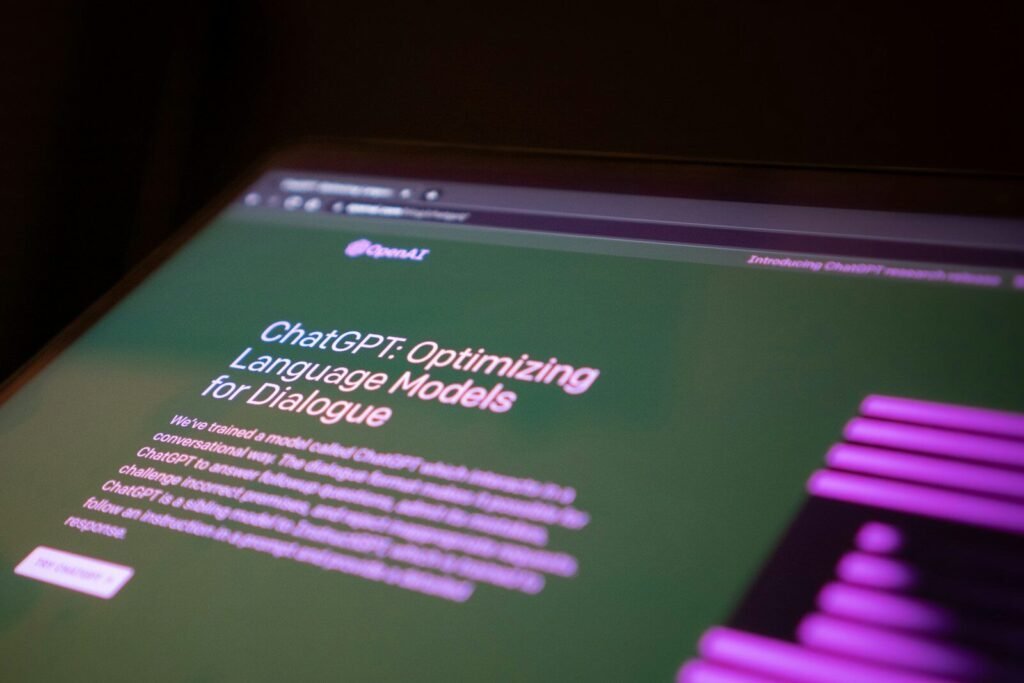
ChatGPT was a defining moment for OpenAI.
Millions of users began interacting with AI daily, accelerating global awareness and adoption.
OpenAI expanded beyond text into multimodal systems.
This shift brought AI closer to human-like interaction.
OpenAI’s influence extends beyond its own products.
Through APIs, developers can integrate OpenAI’s models into applications.
Businesses across industries use OpenAI for:
Strategic partnerships have helped scale OpenAI’s reach globally.
OpenAI’s technologies are reshaping how work is done.
No major technological shift comes without challenges.
AI-generated content can be misleading.
Automation raises concerns about employment.
Questions about who controls AI systems.
OpenAI emphasizes responsible AI development.
These efforts aim to balance innovation with safety.
OpenAI’s long-term vision is AGI.
AI systems capable of performing any intellectual task a human can.
While AGI has not yet been achieved, progress continues rapidly.
Today, OpenAI is recognized as one of the most influential AI organizations in the world.
Its tools are used by individuals, startups, and large enterprises alike.
Looking ahead, OpenAI is expected to:
The next phase of AI development will likely be even more transformative.
Understanding OpenAI’s journey provides insight into the broader evolution of artificial intelligence.
It highlights how quickly technology can progress—and how important it is to guide that progress responsibly.
OpenAI’s evolution from a research lab to a global AI leader is a story of innovation, ambition, and adaptation.
Its impact on technology and society is already significant—and it’s only just getting started.
For anyone interested in the future of AI, OpenAI’s journey is essential to understand.
OpenAI was founded in 2015.
To attract funding and scale its operations while maintaining its mission.
It is best known for ChatGPT and GPT models.
To develop AGI that benefits all of humanity.
Yes, its technologies are used worldwide.