Breaking News
Popular News



Enter your email address below and subscribe to our newsletter
AI News

Artificial intelligence is entering a new phase.
After the rise of large language models and AI copilots, 2026 is shaping up to be the era of multi-agent systems—AI architectures where multiple intelligent agents collaborate, coordinate, and divide tasks to solve complex problems.
Rather than relying on a single powerful model, organizations are now deploying networks of specialized AI agents that work together. This shift could redefine automation, enterprise workflows, research systems, and AI-powered applications.
So what exactly are multi-agent systems—and why are they considered the next big AI shift?
A multi-agent system (MAS) consists of multiple AI agents that interact within a shared environment to achieve specific goals.
Each agent may:
Instead of one monolithic AI system doing everything, tasks are distributed across multiple coordinated agents.

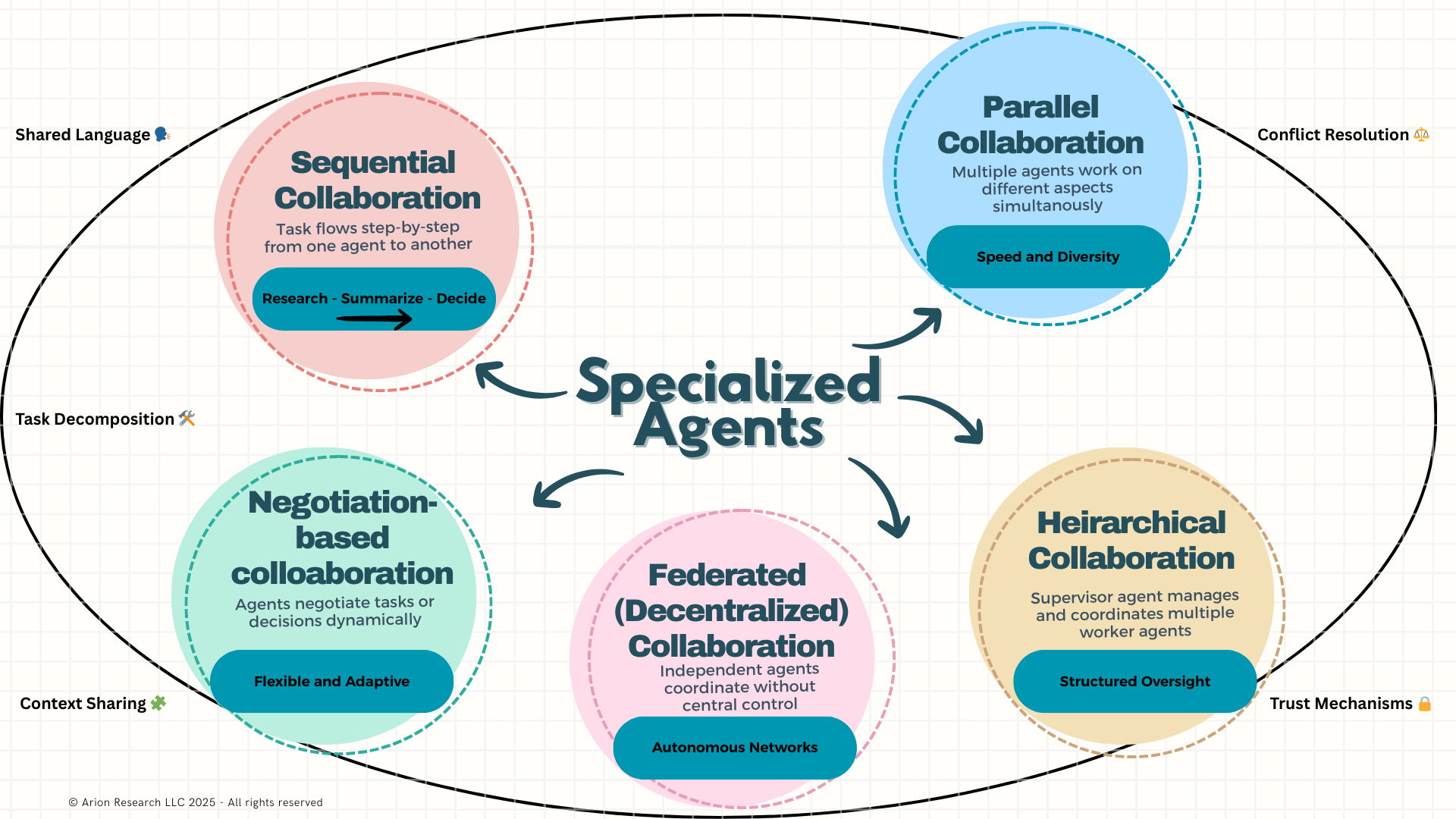


A typical multi-agent architecture includes:
A primary agent breaks a complex objective into smaller subtasks.
Each subtask is assigned to a specialized agent—for example:
Agents exchange structured messages or API calls.
A controller coordinates workflow and aggregates results.
This modular structure improves flexibility and scalability.
Several technological developments have enabled this shift:
Platforms such as OpenAI now support:
These capabilities make agent coordination feasible.
Improved memory capacity allows agents to track longer workflows and maintain consistency.
Modern software systems expose APIs, allowing agents to:
This interconnected infrastructure supports agent collaboration.


In enterprise environments, multi-agent systems can:
Each step handled by a different specialized agent.
Development-focused multi-agent systems may include:
This mirrors human engineering teams—but with automated coordination.
Multi-agent systems can:
This improves research reliability and depth.
Agents can:
Distributed agents reduce single-point failure risk.
Specialized agents can be upgraded independently.
Workloads can be distributed across multiple agents in parallel.
Cross-validation between agents reduces hallucinations and errors.
Failure of one agent does not necessarily collapse the entire system.
Multi-agent systems also introduce complexity.
Managing communication between agents requires careful design.
More agents = more API calls = higher operational costs.
Autonomous agents interacting with APIs can expose vulnerabilities if not sandboxed.
Unexpected agent interactions may create unintended outcomes.
Governance and guardrails are essential.
| Feature | Single-Agent System | Multi-Agent System |
|---|---|---|
| Structure | Monolithic | Modular |
| Task Handling | Centralized | Distributed |
| Scalability | Limited | High |
| Error Resilience | Lower | Higher |
| Complexity | Simpler | More complex |
Multi-agent systems are more powerful—but require stronger architectural discipline.
In the coming years, we may see:
Multi-agent AI may eventually resemble organizational structures—with AI agents acting like digital employees.
Multi-agent systems represent a major shift in AI architecture—from centralized intelligence to distributed collaboration.
Instead of relying on one model to handle everything, multi-agent systems divide tasks across specialized AI units that coordinate and validate each other.
This approach unlocks greater scalability, automation, and reliability—but demands thoughtful design and oversight.
As AI continues to evolve, multi-agent systems may become the foundation of next-generation enterprise automation and intelligent infrastructure.
The next big AI shift isn’t just smarter models—it’s smarter coordination.